
Installing a new kitchen is one of the biggest investments you’ll make in your home. You’ve likely spent hours browsing showrooms for the perfect cabinets and quartz worktops, but there is one crucial element that shouldn’t be an afterthought: the electrical plan.
From induction hobs that require dedicated circuits to the perfect ambient lighting, the “behind-the-scenes” wiring is what makes a kitchen truly functional. Here is everything you need to know about electrical works for your UK kitchen renovation.
1. Does Your Consumer Unit (Fuse Board) Need an Upgrade?
Modern kitchens are power-hungry. If you’re adding a wine fridge, a boiling water tap, a waste disposal unit and a high-spec oven, your old fuse board might not be up to the task.
- The Safety Check: A qualified electrician will assess if your current consumer unit can handle the additional load.
- RCD Protection: Under UK building regulations, any new kitchen wiring must be protected by an RCD (Residual Current Device) to prevent electric shocks and fires.
2. The Importance of Dedicated Circuits
You can’t just “plug and play” with heavy-duty appliances. Many modern kitchen items require their own dedicated circuit directly from the consumer unit:
- Electric Hobs & Ovens: These often require 6mm or 10mm cabling depending on the kilowatt rating.
- Induction Hobs: These have high peak power demands and need specific breaker sizing.
- Appliances: Dishwashers and washing machines should ideally be on separate feeds to avoid tripping the circuit during heavy use.
3. Smart Socket Placement
Standard UK regulations state that sockets must be at least 300mm (horizontal distance) away from the edge of a sink to minimize water risk. Beyond safety, consider your lifestyle:
- The Island Life: If you’re installing a kitchen island, consider pop-up sockets or built-in USB-C charging ports.
- Hidden Power: Under-cabinet sockets keep your beautiful backsplash tiling uninterrupted.
4. Lighting: Task vs. Ambient
A single “big light” won’t cut it anymore. A professional electrical plan splits your lighting into “zones”:
- Task Lighting: LED strips under wall cabinets so you can see what you’re chopping.
- Ambient Lighting: Dimmable spotlights or pendant lights over a breakfast bar.
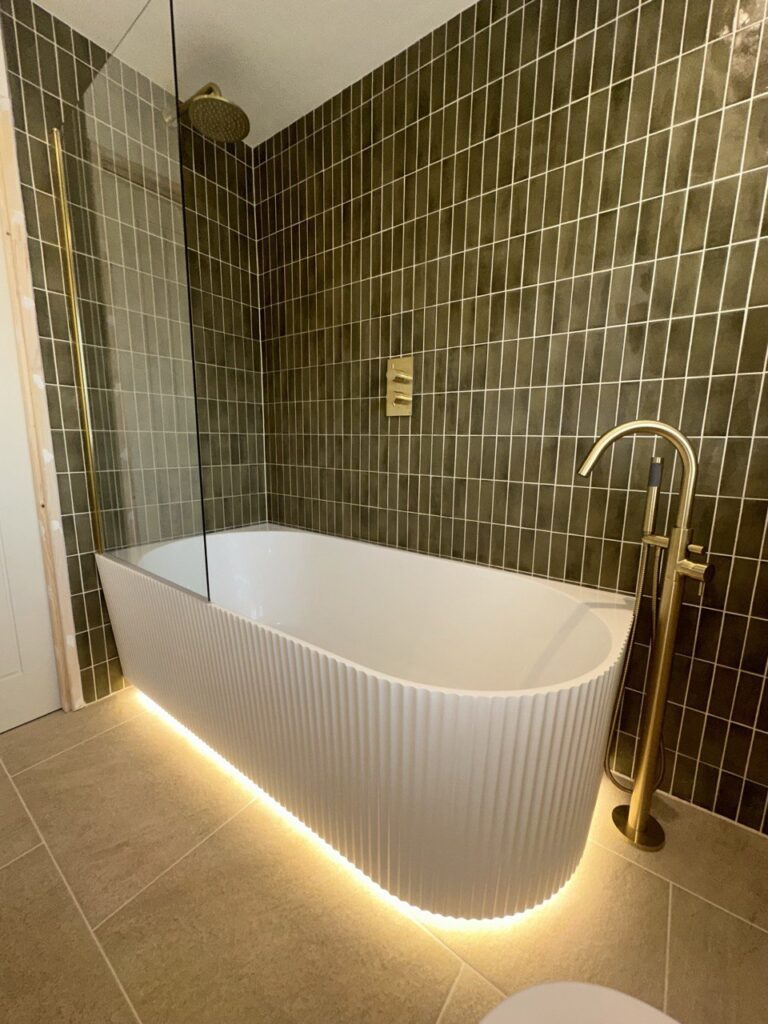
- Plinth Lighting: Floor-level LEDs for a modern, high-end feel.
5. Staying Legal: Part P and Certification
In the UK, kitchen electrical work is “notifiable” under Part P of the Building Regulations. This means the work must be reported to Local Authority Building Control.
Pro Tip: Always hire an electrician registered with a “Competent Person Scheme” (such as NICEIC or NAPIT). They can self-certify the work, saving you the hassle and cost of a separate building inspection, and providing you with an Electrical Installation Certificate—essential for when you eventually sell your home.
Need an Expert for Your Kitchen Project?
If you’re based in Bath and planning a renovation, don’t leave your safety to chance. We specialise in kitchen electrical installations, ensuring your new space is safe, compliant, and powered for the future.